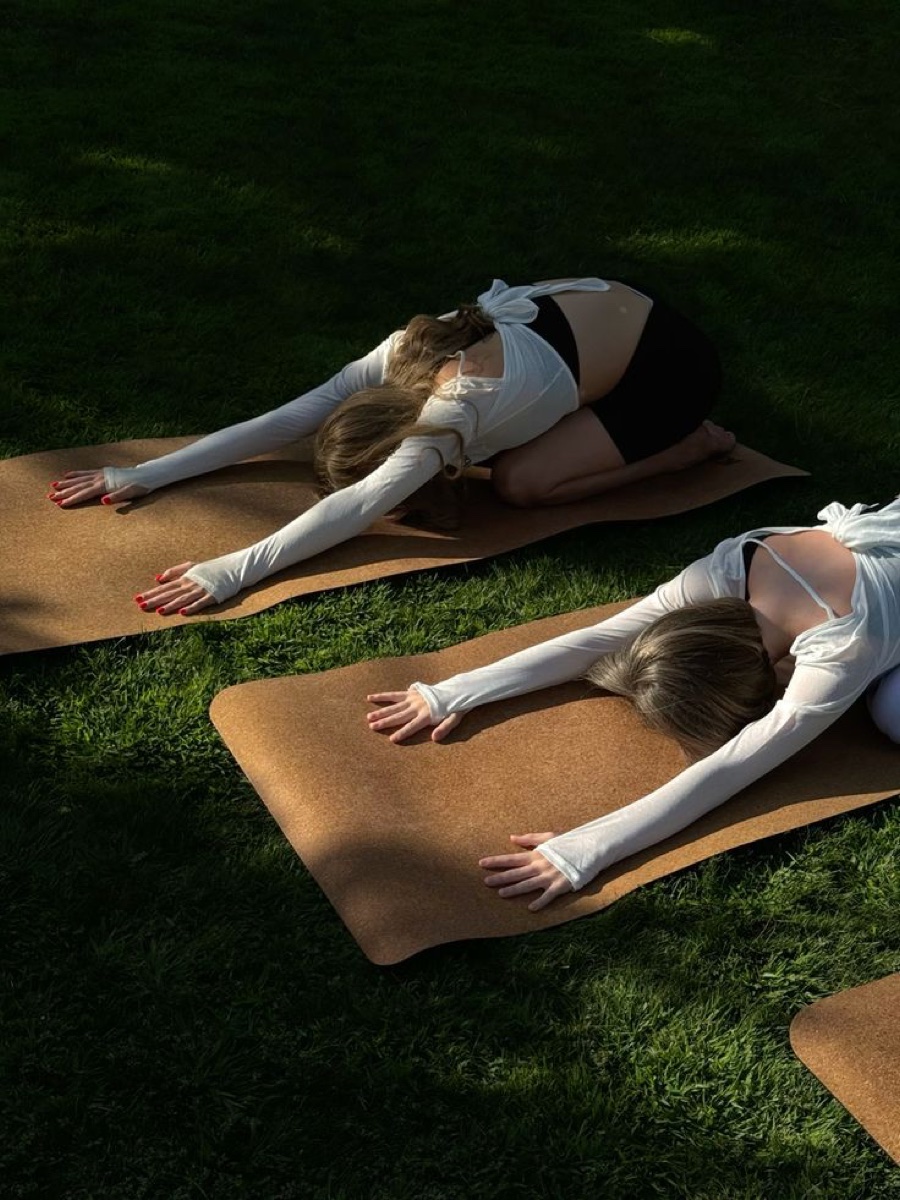
We have become very good at pushing. At optimising, at filling every gap, at measuring rest against productivity and finding it wanting. Even our wellness practices are often shaped by this — the harder the class, the more worthwhile. The sweatier, the better.
Restorative yoga asks us to reconsider all of that.
It is, on the surface, the gentlest form of yoga imaginable. You might hold just four or five poses in an entire hour. You are surrounded by bolsters and blankets. The lights are dim. There is no flow, no choreography, no challenge in the traditional sense. And yet — for many people, it is the hardest thing they've ever done on a mat.
Why Rest Is So Difficult
Most of us have been taught, in subtle and not-so-subtle ways, that doing nothing is a form of failure. That stillness must be earned. That we have to be exhausted before we're allowed to stop. Restorative yoga confronts this belief directly — by asking you to rest before you're depleted, as a practice in itself rather than a reward for effort.
What many students discover in their first restorative class is an uncomfortable restlessness. The urge to move. To adjust. To do something. The mind rebels against the absence of task. And here, quietly, the teaching begins.
"True rest is not the absence of activity. It is the presence of complete permission to be still."
What the Body Knows
When the nervous system is given genuine rest — not the distracted half-rest of scrolling or watching, but deep, conscious stillness — it begins to repair itself. The parasympathetic nervous system activates. Cortisol drops. The breath lengthens. The body remembers how to be at ease.
I have seen people cry in restorative classes. Not from pain — from relief. From the unfamiliar sensation of being fully held. The bolsters and blankets are not just props; they are a message to the body that it doesn't have to hold itself up right now. That someone — something — has it supported.
Bringing It Into Your Life
You don't need a full restorative class to access this quality of rest. Even ten minutes in Supported Child's Pose — forehead on a folded blanket, arms alongside the body — can shift your nervous system meaningfully.
The lesson of restorative yoga, ultimately, is not about what happens on the mat. It is about learning to recognise when you need softness more than strength — and giving yourself permission to choose it.
"Doing less, it turns out, is its own kind of mastery."
— Gail